

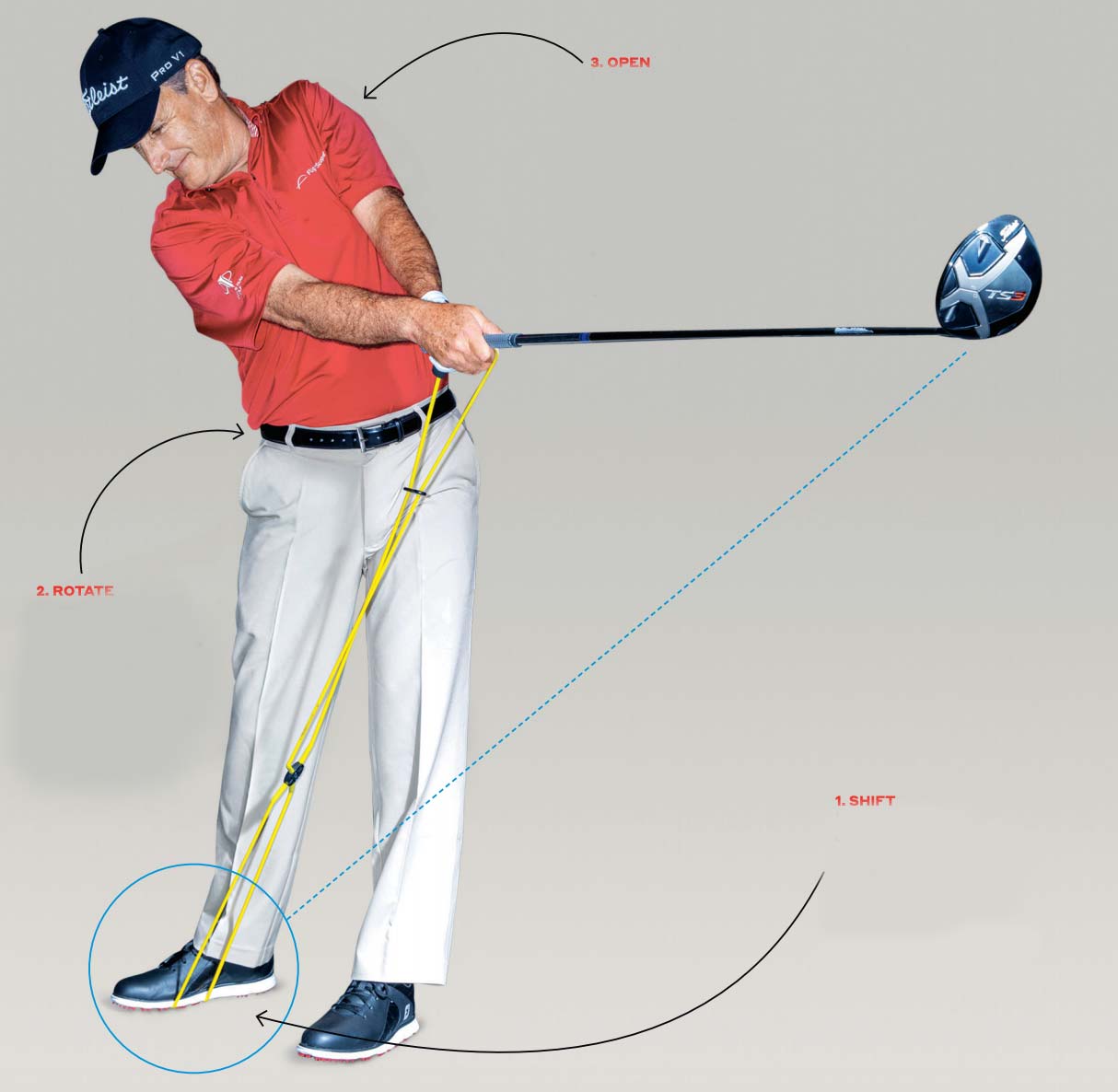
If you’re looking to take your golf game to the next level, then it may be time to consider incorporating resistance bands into your training routine. These versatile and portable exercise tools can help improve your golf swing by targeting key muscles used in the golf swing, such as the core, shoulders, and hips. In this article, we will explore different exercises that can be done with resistance bands to enhance your golf game and provide tips on incorporating them effectively into your training regimen. So grab your resistance bands and get ready to elevate your golf swing to new heights!
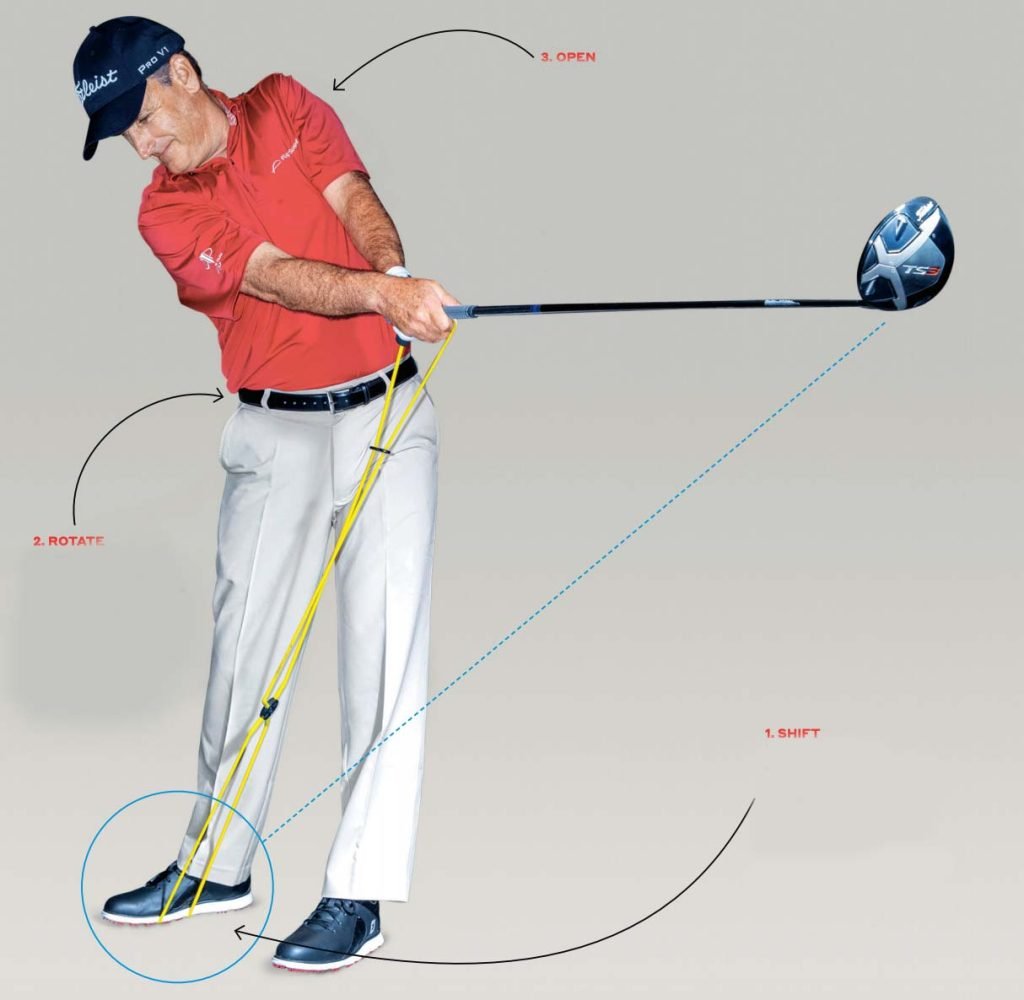
This image is the property of golf.com.
Benefits of Using Resistance Bands for Golf Swing
Resistance bands can be a valuable addition to your golf training routine, offering several benefits to enhance your golf swing. From improved strength and increased flexibility to enhanced stability and a reduced risk of injury, incorporating resistance bands into your workouts can positively impact your performance on the golf course.
Improved Strength
One of the primary benefits of using resistance bands for your golf swing is the improvement in strength. Resistance bands provide resistance in all directions, allowing you to target specific muscles that are crucial for a powerful and consistent golf swing. By incorporating resistance band exercises into your training, you can strengthen the muscles in your arms, shoulders, back, and core, which are all essential for generating power and maintaining control throughout your swing.
Increased Flexibility
Flexibility is another key component of a successful golf swing, as it allows for a full range of motion and proper positioning. Resistance bands can improve flexibility, enabling you to perform dynamic stretching exercises that target the muscles needed for a fluid and efficient swing. Incorporating resistance band stretches into your warm-up routine can help loosen tight muscles, improve joint mobility, and enhance overall flexibility.
Enhanced Stability
Stability is vital to a golfer’s ability to maintain balance and control throughout the swing. Resistance bands can enhance stability by engaging the muscles that support proper posture and alignment. By performing exercises that challenge your balance and stability, such as single-leg exercises or balance exercises with resistance bands, you can strengthen these muscles and develop greater stability, resulting in a more controlled and consistent golf swing.
Reduced Risk of Injury
Incorporating resistance bands into your golf training can also help reduce the risk of injuries. Resistance band exercises can improve muscular imbalances, strengthen weak muscles, and correct faulty movement patterns, all of which can contribute to a more efficient and injury-resistant golf swing. By targeting specific muscle groups involved in the golf swing, such as the rotator cuff and forearm muscles, you can minimize the risk of strain and injury, allowing you to play golf pain-free and confidently.
Choosing the Right Resistance Bands
When choosing resistance bands for your golf training, several factors must be considered to ensure they suit your needs and fitness level.
Consider Your Fitness Level
Before selecting resistance bands, it’s essential to consider your current fitness level and strength. Resistance bands come in various resistance levels, ranging from light to heavy. Beginners or individuals with limited strength may want to start with lighter bands and gradually progress to higher-resistance bands as their strength improves. Choosing bands that challenge you without compromising proper form and technique is important.
Determine the Resistance Level
The resistance level of the bands you choose should match the specific exercises and muscle groups you plan to target. Lighter bands are ideal for exercises that require higher repetitions and focus on muscle endurance, while heavier bands are better suited for increasing strength and power. It’s helpful to have a variety of resistance bands with different tension levels to accommodate a range of exercises and muscle groups.
Check for Durability
Durability is an important factor to consider when selecting resistance bands. Look for bands made from high-quality latex or other durable materials to withstand repeated use without losing their elasticity or snapping. Bands with reinforced handles or attachments can provide added security and stability during exercises. Checking customer reviews and ratings can also give you an idea of the durability and longevity of the bands you are considering.
Warming Up with Resistance Bands
Warming up properly before any physical activity, including golf, is crucial for preparing your body for optimal performance and reducing the risk of injury. Resistance bands can be an excellent tool for warming up, as they provide resistance and assistance during dynamic stretching exercises.
Dynamic Stretching Exercises
Dynamic stretching involves using controlled movements to stretch and warm the muscles dynamically. With resistance bands, you can incorporate various dynamic stretching exercises into your warm-up routine to target the muscles involved in the golf swing. Examples of dynamic stretches using resistance bands include arm circles, side-to-side leg swings, trunk rotations, and shoulder dislocations. These exercises help increase blood flow, improve joint mobility, and activate the muscles needed for a powerful and fluid golf swing.
Targeting Specific Muscles
Resistance bands can also be used during warm-up to target and activate certain muscles essential for a proper golf swing. For example, you can use resistance bands to perform external rotations targeting the shoulder rotator cuff muscles. This exercise helps strengthen these muscles, improving shoulder stability and reducing the risk of injury during the swing. By adding resistance band exercises that target specific muscle groups involved in the golf swing, you can effectively activate and prepare these muscles for optimal performance.
Exercise Techniques to Improve Golf Swing with Resistance Bands
Resistance bands provide a versatile and portable option for improving your golf swing. Incorporating specific exercise techniques using resistance bands can help target key muscle groups and enhance your overall swing mechanics.
Resistance Band Rotation
The resistance band rotation exercise is a highly effective way to strengthen the muscles involved in the rotational movement of the golf swing. Attach a resistance band to a stationary object at chest height to perform this exercise. Hold the band with both hands in front of your chest, elbows bent, and palms facing each other. Rotate your trunk and shoulders away from the anchored point, keeping your arms straight and maintaining resistance in the band. Slowly return to the starting position and repeat the movement for the desired number of repetitions. This exercise targets the core muscles, shoulders, and upper back, helping to improve rotation and generate power during the golf swing.
Resistance Band Pull-Apart
The resistance band pull-apart exercise targets the muscles of the upper back, which play a crucial role in maintaining proper posture and alignment throughout the golf swing. To perform this exercise, stand with your feet shoulder-width apart, holding a resistance band in front of your chest with both hands. Engage your core and keep a slight bend in your knees. Pull the band apart by squeezing your shoulder blades together, keeping your arms straight. Slowly return to the starting position and repeat for the desired number of repetitions. The resistance band pull-apart exercise helps improve posture, shoulder stability, and scapular retraction, leading to a more controlled and efficient golf swing.
Resistance Band Rows
Resistance band rows target the upper back and arm muscles, which are important for maintaining proper posture and generating power in the golf swing. To perform this exercise, anchor the resistance band to a stable waist-high object. Stand facing the anchor point, holding the band with both hands, palms facing each other. Step back to create tension in the band while maintaining a slight bend in your knees and a flat back. Pull the band towards your waist, squeezing your shoulder blades together. Slowly return to the starting position and repeat for the desired number of repetitions. Resistance band rows can help improve back strength, posture, and overall swing mechanics.
Resistance Band Squats
Resistance band squats target the muscles of the lower body, including the glutes, quadriceps, and hamstrings. Strong legs and a stable lower body are crucial for generating power and maintaining balance during the golf swing. To perform this exercise, place the resistance band under your feet and hold the ends of the band at shoulder height, palms facing forward. Stand with your feet shoulder-width apart and toes slightly turned out. Lower your body into a squat position, keeping your knees aligned with your toes and your chest lifted. Push through your heels to return to the starting position and repeat for the desired number of repetitions. Resistance band squats can help improve lower body strength, stability, and overall power in the golf swing.
Resistance Band Lunges
Resistance band lunges target the muscles of the lower body, including the glutes, quadriceps, and hamstrings, while also challenging balance and stability. To perform this exercise, place the resistance band under your front foot and hold the ends of the band at shoulder height, palms facing forward. Step forward with one foot into a lunge position, keeping your front knee aligned with your ankle and your back knee hovering above the ground. Push through your front heel to return to the starting position and repeat on the other side. The resistance band adds tension throughout the movement, challenging the muscles and helping to improve lower body strength and stability for a more powerful golf swing.
Incorporating Resistance Bands into Golf Practice
Resistance bands can be used during dedicated workout sessions and golf practice to enhance your swing mechanics and overall performance on the course.
Using Resistance Bands at the Driving Range
At the driving range, resistance bands can be a valuable tool for reinforcing proper swing mechanics and generating power. Attach a resistance band to a stationary object, such as a fence or golf bag, positioned slightly behind you. Stand in your golf posture, holding the other end of the band with your lead hand (left hand for right-handed golfers). As you make your backswing, feel the band’s resistance and focus on maintaining proper wrist hinge, shoulder rotation, and body alignment. This exercise helps develop muscle memory and reinforces efficient swing mechanics, leading to more consistent and powerful shots.
Performing Drills with Resistance Bands
Resistance bands can also be used for specific swing drills to target and correct common swing faults. For example, if you struggle with a casting or early release of the club, you can attach a resistance band to a stationary object and loop it around your lead arm (left arm for right-handed golfers) just above the elbow. As you make your downswing, the band’s resistance will encourage you to maintain a straight lead arm and prevent premature extension. This drill helps promote a proper sequencing of the golf swing and can greatly improve ball-striking consistency.
Strengthening Core Muscles for a Better Golf Swing
A strong and stable core is fundamental for a powerful and consistent golf swing. Resistance bands can be highly effective in targeting and strengthening the core muscles vital for generating rotational power and maintaining proper posture throughout the swing.

This image is the property of worldwide. Golf.
Abdominal Exercises with Resistance Bands
Resistance bands offer a wide range of exercises that target the abdominal muscles. One effective exercise is the resistance band plank. Place the resistance band around your waist and get into a plank position, resting on your forearms and toes. Engage your core muscles and hold the plank position while maintaining tension in the band. Start with shorter durations and gradually increase the time as your core strength improves. The resistance band plank strengthens the entire core, including the rectus abdominis, transverse abdominis, and obliques, improving stability and generating more power in the golf swing.
Oblique Exercises with Resistance Bands
Strong oblique muscles are essential for generating rotational power and maintaining stability in the golf swing. Resistance bands can target the obliques through exercises such as standing trunk rotations with a resistance band. Anchor the band at chest height and stand with your side facing the anchor point. Hold the band with both hands in front of your chest and rotate your trunk away from the anchor, using the band’s resistance to engage the oblique muscles. Slowly return to the starting position and repeat on the other side. This exercise helps strengthen the obliques, improving rotation and stability during the golf swing.
Back Strengthening with Resistance Bands
A strong back is crucial for maintaining proper posture and generating power in the golf swing. Resistance bands can target the upper and lower back muscles through exercises such as resistance band rows and reverse flys. These exercises help strengthen the muscles responsible for scapular retraction, spinal stability, and overall posture. By incorporating back-strengthening exercises with resistance bands into your golf fitness routine, you can develop a stronger and more stable back, leading to a more efficient and powerful golf swing.
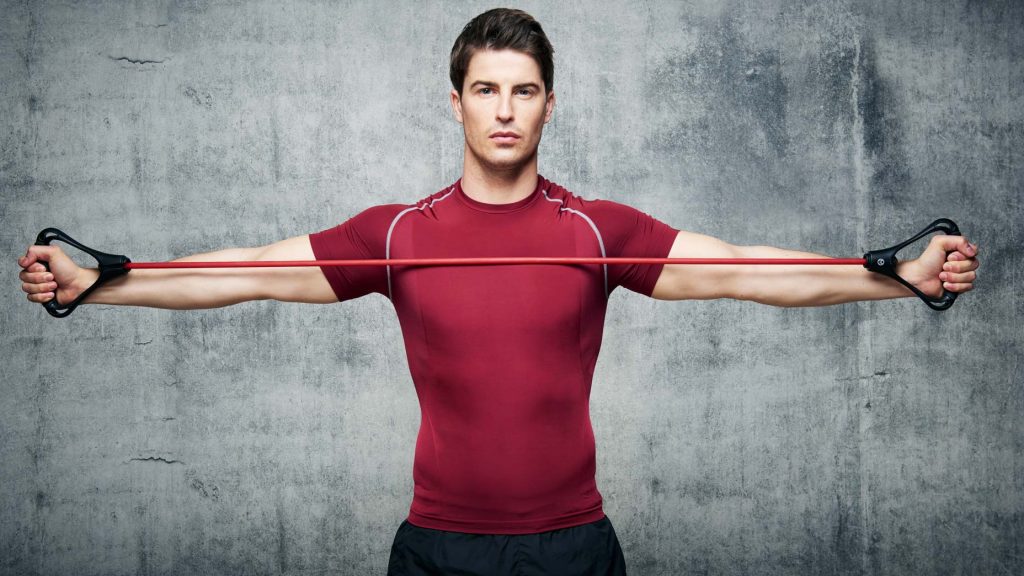
This image is the property of golf.com.
Improving Flexibility and Range of Motion
Flexibility is a key component of an effective golf swing, allowing for a full range of motion and proper positioning. Resistance bands can improve flexibility in various areas of the body that are critical for a fluid and efficient swing.
Resistance Band Shoulder Stretch
Shoulder flexibility is essential for full backswing and follow-through in the golf swing. Resistance bands can be used to stretch and improve shoulder flexibility through exercises such as the resistance band shoulder stretch. Anchor the band to a stationary object at waist height. Stand away from the anchor point, holding the band with one hand and extending your arm across your chest. Gently pull the band towards the opposite side, feeling a stretch in the shoulder and upper back. Hold the stretch for 20 to 30 seconds and repeat on the other side. This exercise helps lengthen and loosen the shoulders and upper back muscles, improving the range of motion and allowing for a more fluid swing.
Resistance Band Hamstring Stretch
Flexible hamstrings are important for maintaining posture and generating power in the golf swing. Resistance bands can target and improve hamstring flexibility through exercises such as the resistance band hamstring stretch. Anchor the band to a stationary object at floor level. Lie on your back with one leg extended straight on the ground and loop the band around the other foot. Gently pull the band towards you, feeling a stretch in the back of the thigh. Hold the stretch for 20 to 30 seconds and repeat on the other leg. This exercise helps lengthen and loosen the hamstrings, enhancing hip mobility and allowing for a more efficient and fluid swing.
Resistance Band Hip Flexor Stretch
Flexible hip flexors are essential for proper lower body mechanics and balance in the golf swing. Resistance bands can stretch and improve hip flexor flexibility through exercises like the resistance band hip flexor stretch. Anchor the band to a stationary object at floor level. Kneel and loop the band around one foot. Step forward with the other foot, creating tension in the band. Lean forward from the hips, feeling a stretch in the front of the hip of the back leg. Hold the stretch for 20 to 30 seconds and repeat on the other leg. This exercise helps lengthen and loosen the hip flexor muscles, improving hip mobility and allowing for a more balanced and powerful swing.
Enhancing Stability and Balance
Stability and balance are crucial for a controlled and consistent golf swing. Resistance bands can challenge and improve stability and balance through various exercises that target the muscles responsible for maintaining proper posture and alignment.
Resistance Band Single-Leg Exercises
Resistance bands can be incorporated into single-leg exercises to challenge stability and balance. Single-leg exercises such as single-leg squats or single-leg deadlifts can be performed with resistance bands to engage the muscles of the lower body and core, promoting stability and balance. Adding resistance bands to single-leg exercises creates instability, forcing the muscles to work harder to maintain balance. This helps develop better proprioception and overall stability, improving control and balance throughout the golf swing.
Resistance Band Balance Exercises
Resistance bands can also perform balance exercises targeting the muscles that maintain stability and balance during the golf swing. For example, standing on one leg while holding the ends of a resistance band in front of you, palms facing each other, and performing bicep curls or overhead presses can challenge your balance and stability. Incorporating resistance band balance exercises into your golf training routine can strengthen the muscles responsible for maintaining proper posture and alignment, resulting in better stability and balance throughout your swing.
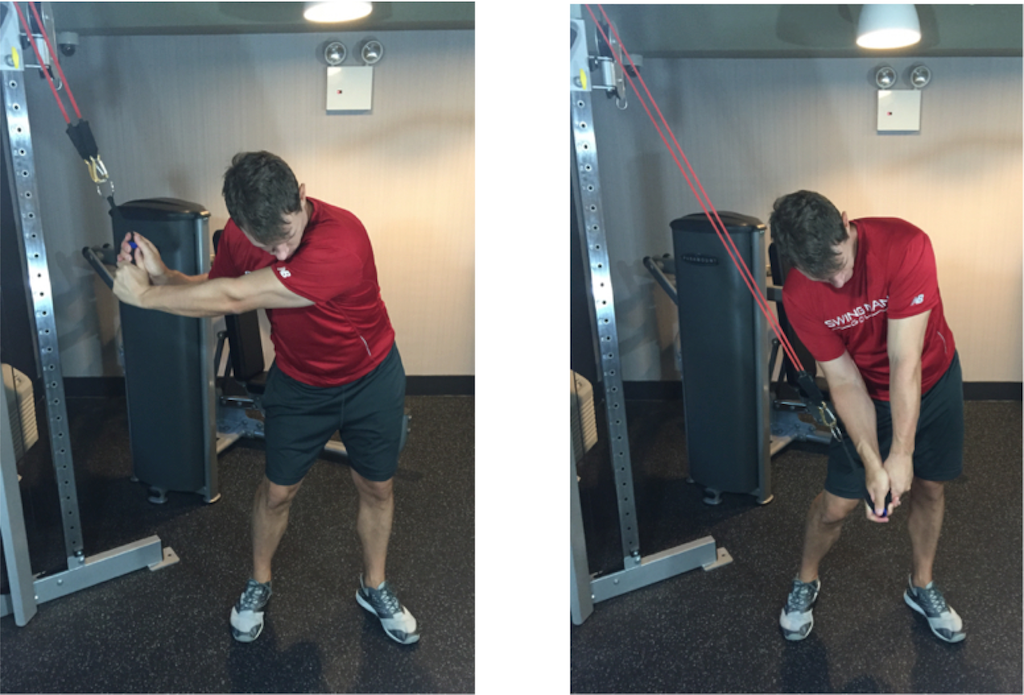
This image is the property of www.golfwrx.com.
Preventing Golf Swing Injuries with Resistance Bands
Injuries can be a significant setback in golf, affecting performance and enjoyment of the game. Resistance bands can effectively prevent golf swing injuries by strengthening the muscles and improving flexibility in areas prone to injury.
Rotator Cuff Strengthening Exercises
The rotator cuff muscles in the shoulder are vulnerable to strain and injury in the golf swing. Resistance bands can target and strengthen the rotator cuff muscles, reducing the risk of injury. Exercises such as external and internal rotations with resistance bands can help improve the stability and strength of the rotator cuff muscles. By incorporating these exercises into your golf fitness routine, you can better protect the shoulder joint and minimize the risk of rotator cuff injuries.
Wrist and Forearm Strengthening Exercises
The wrists and forearms play a crucial role in the golf swing, and injuries in these areas can greatly affect performance. Resistance bands can be used to strengthen the muscles of the wrists and forearms, improving grip strength and reducing the risk of injury. Exercises such as wrist curls, wrist extensions, and pronation/supination exercises with resistance bands can help develop strength and stability in the wrists and forearms. Including these exercises in your golf training routine can enhance your ability to control the club, resulting in more consistent and powerful shots.
Stretching Exercises for Golfers Elbow
Golfer’s elbow, also known as medial epicondylitis, is a common injury that affects the tendons inside the elbow. Resistance bands can be used to perform stretching exercises that help alleviate symptoms and prevent golfer’s elbow. One effective exercise is the resistance band wrist flexor stretch. Hold a resistance band with one hand, palm facing down. Extend your arm in front of you, keeping your elbow straight. Use your other hand to pull back on the resistance band, feeling a stretch in the forearm. Hold the stretch for 20 to 30 seconds and repeat on the other arm. This exercise can help improve flexibility and reduce the risk of a golfer’s elbow.
Incorporating Resistance Bands into Golf Fitness Routine
To maximize the benefits of resistance bands for your golf swing, it’s important to incorporate them into your overall golf fitness routine. By combining resistance band exercises with other golf-specific workouts and drills, you can develop strength, flexibility, and stability in key areas of the body that directly impact your swing.
Full-Body Resistance Band Circuit
Creating a full-body resistance band circuit can efficiently and effectively target multiple muscle groups involved in the golf swing. Design a circuit that includes exercises such as resistance band squats, resistance band rows, resistance band rotations, and resistance band bicep curls. Perform each exercise for a set number of repetitions or a specific time interval, then move on to the next exercise without resting. Complete the circuit for a specified number of rounds. This full-body resistance band circuit can help improve overall strength, stability, and flexibility, directly translating to a more powerful and consistent golf swing.
Interval Training with Resistance Bands
Interval training involves alternating between periods of high-intensity exercise and rest or low-intensity exercise. Resistance bands can be incorporated into interval training to add extra challenge and intensity to your workouts. For example, perform exercises such as resistance band jumps, resistance band sprints, or resistance band lateral shuffles at a high intensity for a short duration, followed by rest or low-intensity exercise. Repeat this cycle for a specific number of rounds or a set duration. Interval training with resistance bands can help improve cardiovascular fitness, muscular endurance, and explosive power, which are beneficial for a more powerful and consistent golf swing.
In conclusion, incorporating resistance bands into your golf training routine can benefit your golf swing. By targeting key muscle groups, improving strength, flexibility, stability, and balance, and reducing the risk of injury, resistance bands can help you improve your overall swing mechanics and performance on the golf course. Whether you are a beginner or an experienced golfer, adding resistance band exercises to your golf fitness routine can significantly improve your game. So grab your resistance bands and work towards a better golf swing today!